ERMIN MARKETING

Google Ads where you can see the result in dollars

We manage Google advertising for local businesses in the US and Europe. Beyond impressions and clicks, our reports show what matters: profit and return on investment — how much you get back for every dollar put into ads.

Ads audit — $35
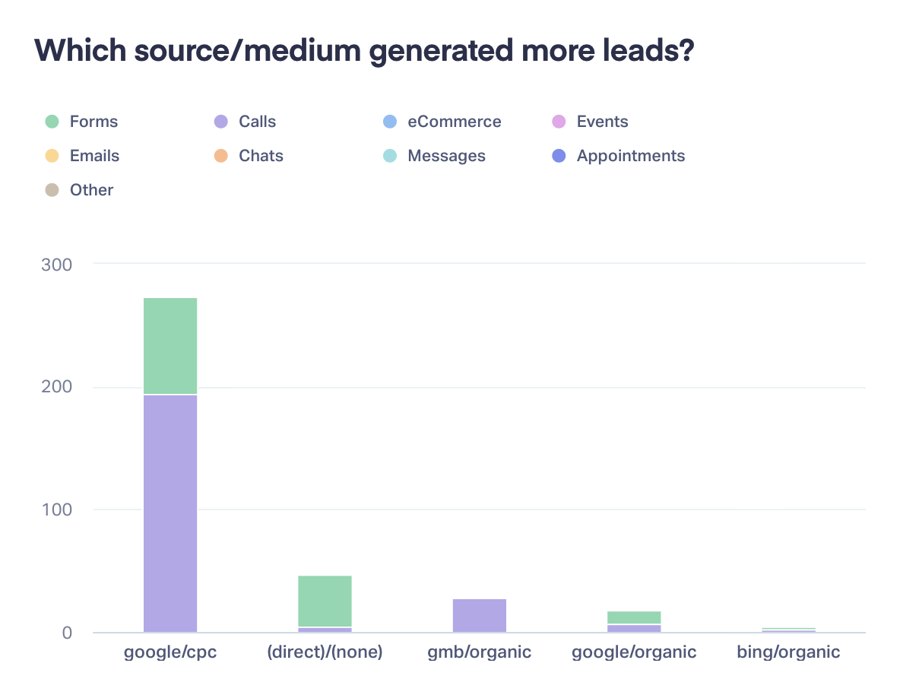
Client's CRM lead sources chart: google/cpc brings the most calls and forms
Service
Google Ads management
Coverage
US & Europe
Model
Reporting in profit and ROI, not clicks
Where ads run
Search · Maps · YouTube · Gmail
Pricing
Audit $35 · support from $750/mo
The problem

Why advertisers switch off ads that are working

The typical story: the ads launch, impressions and clicks come in — but whether they're profitable, nobody knows. Unable to judge the result in money, the advertiser cuts the budget within a couple of months or switches the campaigns off entirely. The root of the problem is that most advertisers don't track conversions or pass profit data back — and often don't even know it's possible. And those who do track tend to count every call, spam and wrong numbers included.

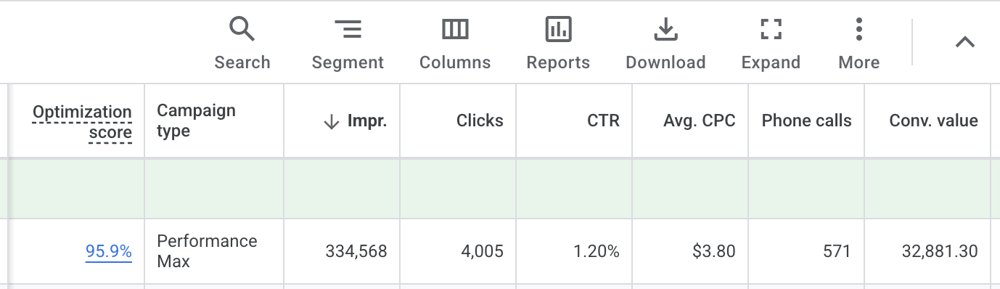
Google Ads campaign stats: impressions, clicks, CTR, CPC, calls and the Conv. value column — 571 calls, $32,881 conversion value
Note the Conv. value column ($32,881) — it only appears for advertisers who feed Google profit data on calls and form leads. In most accounts this column is empty — and judging the ads in dollars is impossible
Our model

We teach Google to find paying customers, not clicks

1
Conversions and call tracking from day one

Every call, form and message is recorded and tied to the campaign, ad and query. Without this, managing ads means flying blind.

2
Every lead verified in the CRM

Spam, wrong numbers, irrelevant inquiries — filtered out. Only confirmed calls and forms make it into the stats.

3
Clean data and profit fed back to Google

Only verified conversions — and the profit earned on them — go back into Google Ads. The algorithm learns that not all calls are equally valuable.

4
Optimizing for money, not clicks

Learning from clean data, the algorithm hunts for people who pay. The reports show which segments bring money — say, which gender or neighborhood — and which just burn budget. The dead weight gets cut.

Calls conversion: 370 verified calls from ads, $32,982 in value passed back
Steps 2–3 in action: 370 calls passed CRM verification, and the profit on them — $32,982 — was fed back to Google. The algorithm learns on money
Gender segment in a Google Ads report: 33 clicks, $1,060 conversion value
Step 4 in action: the gender breakdown is one example. We work across many segments — age, purchasing power, interests, the exact search query typed, and more — and see for each whether it makes money or just spends budget
Where the ads live

Not just Search — and above all, Maps

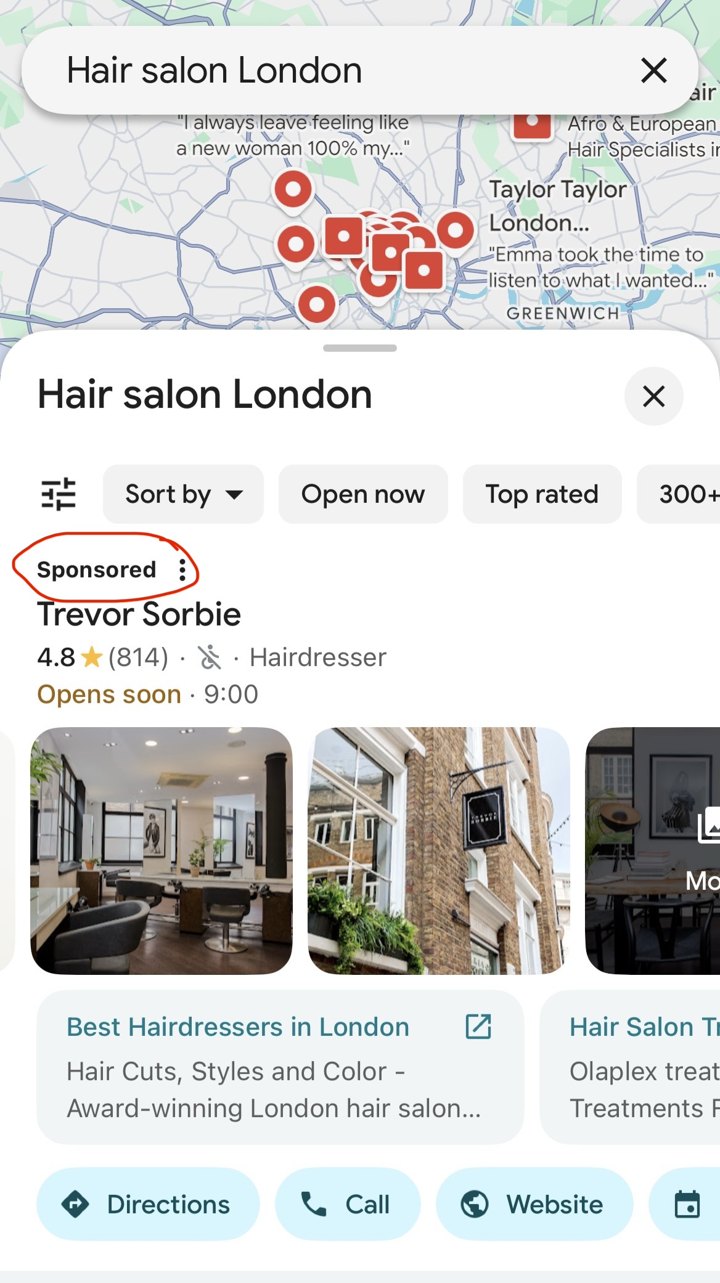
Google Ads inside Google Maps: a Sponsored listing in first place for the query hair salon London
Google Maps results for "hair salon": first place is Sponsored — a profile ad via Google Ads

Many assume Google Ads means Search listings linking to a website. That hasn't been true for a long time. Ads run across the entire Google ecosystem: YouTube, Gmail, partner sites. But the most valuable placement for a local business is Google Maps: the top two spots in Maps results are profile ads via Google Ads.

That is where the hottest, highest-intent demand is concentrated: people open Maps at the final step — to read reviews, find a phone number, or get directions right away. An ad at that moment is a place at the front of the line, ahead of every competitor.

The combination works both ways: profile ads reinforce organic Maps promotion through behavioral signals, while a well-built profile lifts ad performance. And the Store Visit conversion captures even people who saw the ad and simply walked in — no call, no form. For beauty salons and restaurants that is a unique edge over any other online advertising.
Google Ads and AI

AI in advertising only works on clean data

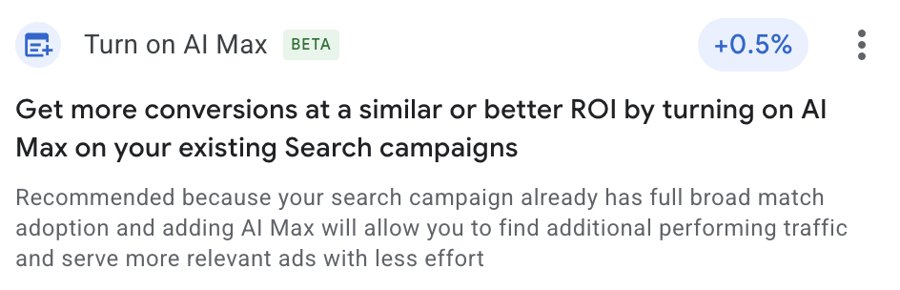
Google keeps adding AI tools to its ads — AI Max for Search campaigns, for example. But AI optimization has a precondition: it needs conversion data — confirmed inquiries, calls, and the profit on them. Without that, AI optimizes into a void. Our clients' campaigns are ready for the switch to AI tools because clean data is already flowing into Google — the same principle our whole AI-visibility practice is built on.

Google Ads recommendation: enable AI Max (Beta) for Search campaigns
Google itself suggests enabling AI Max — but the recommendation appears for campaigns that have accumulated quality conversion data
FAQ

Frequently asked questions

Why do Google Ads "not work" and get switched off?

The typical scenario: the ads launch, impressions and clicks come in, but whether they're profitable is unclear. Unable to judge the result in dollars, the advertiser eventually cuts the budget or stops the campaigns. The root cause: conversion tracking isn't set up, let alone profit data being passed back. The ads may be running at a profit — it's simply invisible.

What is lead verification and why does it matter?

Not every call or form is real: some are spam, wrong numbers, irrelevant inquiries. If you optimize toward the raw total, Google's algorithm learns from garbage. In our model, every call and form is verified in the CRM, and only confirmed inquiries — with the profit earned on them — go back into Google Ads. Learning from clean data, the algorithm hunts for paying customers, not clicks.

What is a Store Visit conversion?

Google can register cases where a person saw the ad and then physically came to your location — even without calling or submitting a form: the user's device shows up at the business's coordinates. For beauty salons, restaurants and other walk-in businesses this is a unique Google advantage over any other online advertising. It isn't available to every account — it depends on data volume.

Where do Google Ads actually show?

Long past Search-only, and long past website-link-only. Ads run across the whole Google ecosystem: YouTube, Gmail, partner sites — and, most valuably for a local business, in Google Maps: the top two spots in Maps results are profile ads via Google Ads. Maps is where the hottest demand lives: people arrive there at the final step — to read reviews, find a phone number, get directions.

How much does Google Ads management cost?

Everything starts with a $35 audit — if ads are already running, we take apart the campaigns and tracking; if not, we assess the niche and competition. Project support is from $750 per month depending on the project; the ad budget is not included and is paid directly to Google. We recommend budgeting from $30/day — below that, the algorithm doesn't get enough data to learn. Google periodically offers ad credits to selected accounts — if yours qualifies, we help you claim it.

How fast do ads deliver results?

Unlike organic promotion, ads bring traffic from the first days after launch. But the algorithm reaching stable efficiency takes weeks: the system needs to accumulate conversion data. The cleaner the data — verified inquiries, profit — the faster and better the campaign learns.

Where does AI come in?

Google keeps adding AI tools to its ads — for example, AI Max for Search campaigns. But AI is useless without data: it needs confirmed conversions and their value, otherwise there is nothing to optimize toward. Our clients' campaigns are ready for the switch to AI tools because clean inquiry and profit data is already flowing into Google.
In short

The essentials — in five points

Contact

Start with the ads audit — $35

Send your business name and city. If ads are already running, we'll take the campaigns apart and show what's being lost without profit tracking. If not, we'll assess the niche, the competition and a starting budget.

Phone / WhatsApp+972 53-382-7132
CompanyErmin Marketing